
English| EUR
Suggested for you
More currencies
Choose a language
Cala Varques sits on the Llevant coast, reachable on foot or by boat but never by car. This famous caves in mallorca guide sets out what the Cova des Coloms approach actually asks of a visitor, from access windows to sea conditions. The concrete answer on hours, cost and timing comes first.
Quick answer
Cova des Coloms is free to enter, with an entrance fee of 0 EUR, and is accessible only via sea or hiking trail. Access is unrestricted around the clock, 00:00–23:59 every day of the week, because there is no gate and no ticket desk. The practical window is 08:00–12:00, when light is best and the sea calmest.
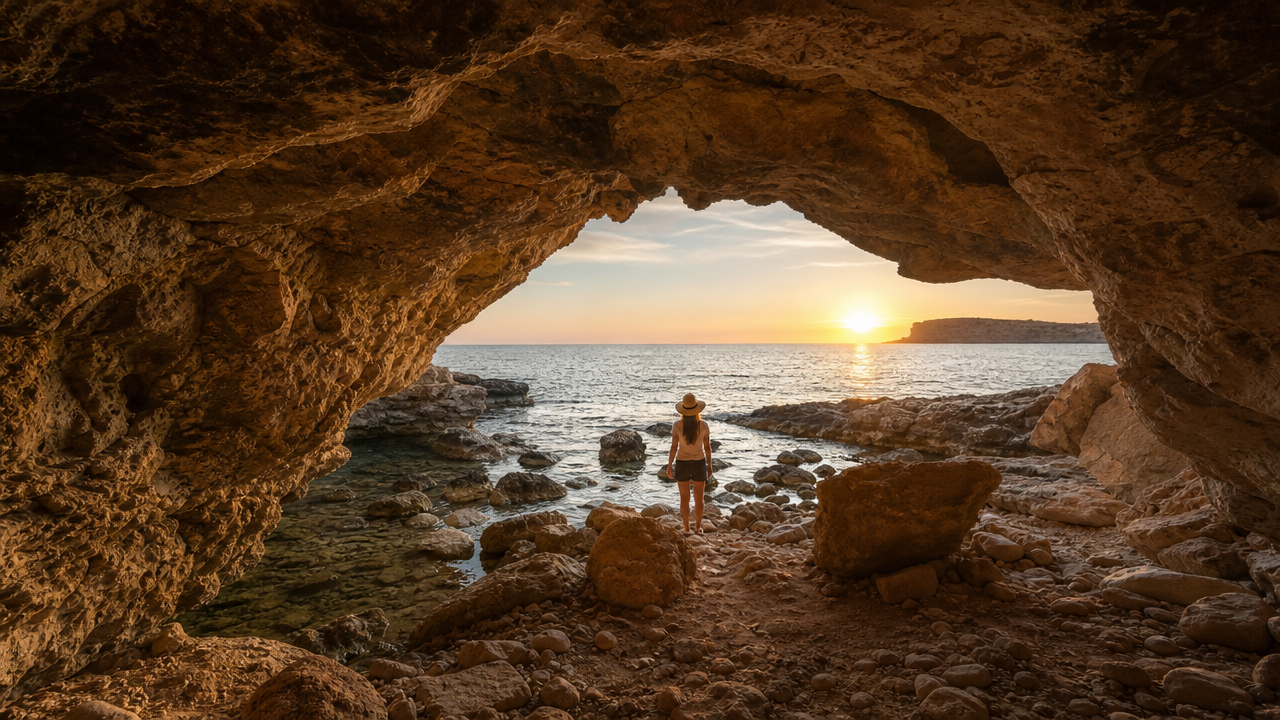
Almost every cave that draws crowds to the island is entered on foot, down a staircase, behind a turnstile. Cova des Coloms is not. There is no lit walkway, no handrail and no attendant collecting anything at the mouth; the chamber opens onto the Mediterranean at Cala Varques on the Llevant coast, and the only ways in are a swim, a kayak, or a small boat brought close in calm water. That single structural fact separates it from the show caves inland and explains why it appears on shortlists of famous caves in mallorca alongside far more developed sites. The context matters for anyone planning around it. Cala Varques itself is undeveloped — no road access, no kiosk, no lifeguard — and reached by a marked hiking trail from the Porto Cristo–Portocolom road. What the guidebooks call cuevas de Mallorca covers two very different categories: the ticketed karst systems with concert boats and stalactite galleries, and the wild coastal sea caves like this one, which belong more to a Mallorca sea cave tour itinerary than to a coach circuit. Cova des Coloms falls firmly in the second group. The limestone here is the same Miocene rock that produced the island's better-known caverns, weathered from seaward rather than sculpted for visitors, which is why the entrance sits at waterline and the interior stays cool and dim even at midday. What a reader should do with that is straightforward. Treat the cave as a swim objective rather than an attraction: the approach depends entirely on swell, and a flat morning sea turns a demanding entry into a manageable one. Snorkellers report better visibility before the day's boat traffic stirs the sand in the cala; photographers get the shaft of light that makes the chamber worth the effort in the same early hours. Anyone assembling a list of famous caves in mallorca for a week on the island will find this one asks more preparation than the rest and rewards a different kind of visit — quieter, unguided, weather-dependent. Coastal landmarks of this type reward flexibility above all. Build the day around the forecast, keep an alternative in reserve, and check the dedicated sections on this site for timing, access route, conduct in the water and what to carry.
“Treat the cave as a swim objective rather than an attraction — the approach depends entirely on swell.”
The optimal time to visit Cova des Coloms is between 08:00 and 12:00. This window provides the best natural light and ensures calmer sea conditions for swimming into the cave safely.
Warm, 20°C–25°C
Early summer offers mild temperatures and stable sea states before the peak heat.
Hot, 28°C–32°C
Expect higher humidity and increased visitor volume during these months.
Mild, 22°C–27°C
Water temperatures remain pleasant, and the sea is generally calm enough for access.
—
Mid-week visits during the early hours minimize crowds and provide the quietest experience.
Verdict: For the safest and most comfortable visit, aim for weekday mornings between 08:00 and 12:00 during the months of May, June, September, or October.
Cova des Coloms is located on the Llevant coast of Mallorca, near Cala Varques. Access to this sea cave is exclusively possible via the sea or by following a coastal hiking trail.
Drive to Cala Varques via MA-4014 and park on the roadside
Follow the marked coastal trail from Cala Varques to the cave entrance
Navigate from nearby ports such as Porto Cristo
Parking at the Cala Varques access point is limited to the side of the road, so arrive early to secure a spot before beginning the hike to the coast.
Cova des Coloms remains accessible to visitors throughout the entire week, including weekends and public holidays. As this is a natural site, it remains open at all hours.
Cova des Coloms is unstaffed and reached only by swimming or scrambling, so there is no guide, no railing and no one checking that you came prepared. Conduct here is what keeps both visitors and the cave's marine life intact.
Cova des Coloms is reached by swimming or hiking to Cala Varques, so gear needs to survive salt water and darkness rather than sit in a daypack.
Everything you need to know about famous caves in mallorca
Yes, Cova des Coloms is widely recognized as one of the famous caves in Mallorca, known for its unique sea-level entrance. It offers a distinct experience for those looking to explore natural subterranean galleries accessible from the water. Visitors often include this site when discovering the most famous caves in Mallorca during their coastal adventures.
Entry to this site is 0 EUR, as it is a natural feature accessible only via sea or hiking trail. There are no ticket offices or payment points at the entrance to this attraction.
The best arrival window is 08:00–12:00 to ensure the best natural light and calmer sea conditions for swimming into the cave. Visiting during these hours helps avoid potential afternoon chop in the Mediterranean waters.
The site is accessible every day of the week, with hours listed as 00:00–23:59. While it is open, safety and light conditions depend entirely on the time of day and weather.
To reach this destination among famous caves in Mallorca, you must travel to the Llevant coast near Cala Varques. Access requires either a sea approach by kayak or a hike through the surrounding terrain.
While the site is a natural wonder, it requires swimming or hiking to access, which may not be suitable for young children. Proper physical preparation is necessary before attempting to reach the entrance.
When visiting, ensure you have appropriate footwear for hiking and gear suitable for swimming in the sea. Since there are no facilities on-site, bringing water and navigation tools is recommended for your safety.