
English| EUR
Suggested for you
More currencies
Choose a language
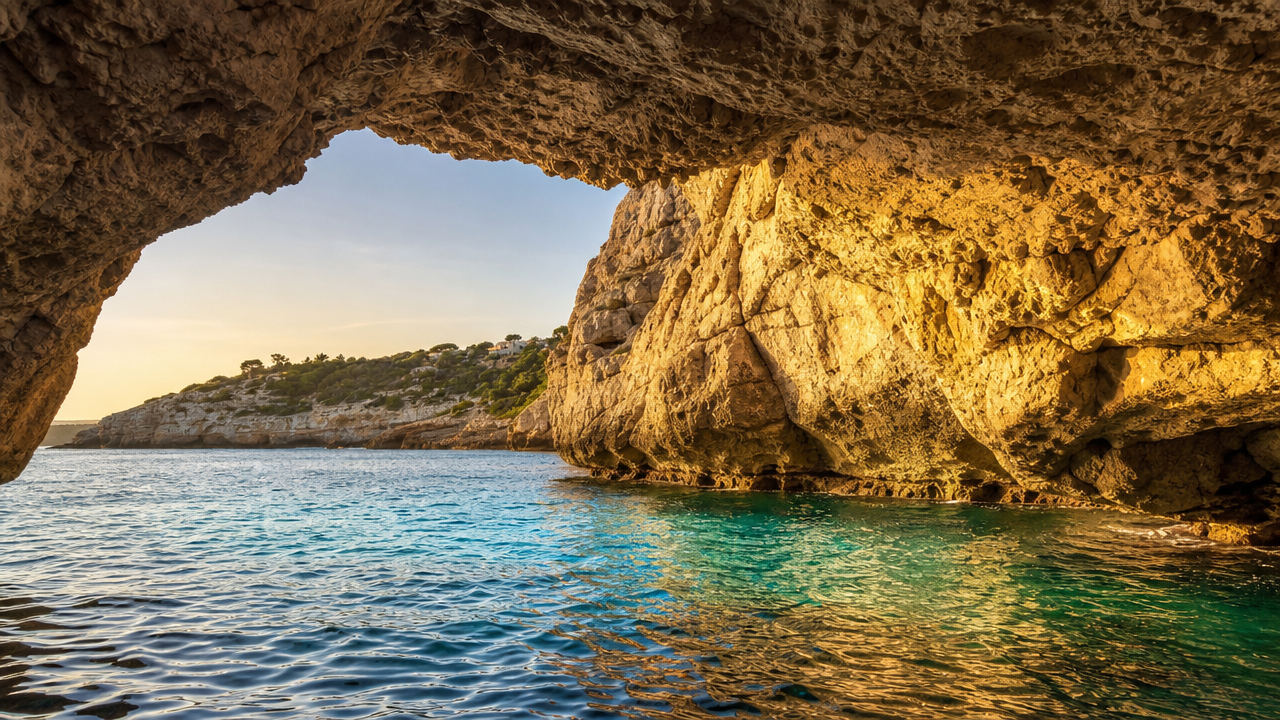
Cova des Coloms opens straight onto the water at Cala Varques, on Mallorca's Llevant coast, with no turnstile between a swimmer and the Balearic Sea. That makes water conditions, not queues, the thing worth researching before a visit. This mallorca sea temperature guide sets out what the sea feels like across the year and how that shapes a cave swim.
Quick answer
Sea temperatures around Mallorca typically run from about 14°C in late winter to roughly 26°C in late August, when most cave swims take place. Water inside the cave sits a degree or two cooler than the open bay, since the chamber never takes direct sun. Entry to the cove costs 0 EUR, and the calmest, best-lit arrival window is 09:00–12:00.
The sea keeps a different calendar from the land. Balearic water reaches its annual peak in late August, several weeks after the hottest air, and bottoms out in March, long after midwinter. That lag is the single most useful thing to understand about mallorca sea temperature before planning a swim into Cova des Coloms. A June afternoon can feel tropical on the cliff path above Cala Varques and distinctly bracing once a swimmer is past the rocks. Inside the cave, the numbers shift again. The chamber sits in permanent shadow, walled in limestone that never takes direct sun, and the water there tends to run a degree or two below the open bay. Depth matters as well: a shallow thermocline can lay warm surface water over a cooler layer, which freedivers notice at once and snorkellers barely register. Temperature is also cumulative rather than instantaneous. Twenty-four degrees is comfortable for ten minutes of floating and considerably less so after forty minutes of treading water in a dim chamber, which is why many swimmers wear a thin neoprene top even in high summer. Temperatura del mar a Mallorca is only half the brief, though. Swell and wind govern whether the entrance is passable at all. A flat, glassy morning on the Llevant coast turns the swim-through into something manageable for an average swimmer, while a metre of southeasterly chop closes it outright. Operators running sea caving in Mallorca read both variables together, and the early window exists precisely because onshore breezes build through the afternoon and roughen the approach. The practical takeaway is that a water reading is a planning input, not a verdict. It tells a visitor what to wear and how long to stay in — it does not tell them whether the cave is reachable, because Cova des Coloms has no gate, no desk and no staff to ask. Anyone weighing mallorca sea temperature against a booking calendar should check the operator's own conditions report on the morning of the trip. Crews here stand down for swell far more often than for cold water, and that, rather than a thermometer, is usually what decides the day.
“Cold in a sea cave is cumulative, not instantaneous: comfortable for ten minutes is not comfortable for forty.”
The period from June to September offers the warmest sea temperatures, typically ranging from 23°C to 26°C. To ensure optimal visibility and calm conditions for swimming into Cova des Coloms, the best arrival window is 09:00–12:00.
19°C–22°C sea temp
Water begins to warm; stable conditions during morning hours.
24°C–26°C sea temp
Warmest water temperatures of the year.
23°C–25°C sea temp
Sea remains warm while air temperatures become cooler.
—
Best light for cave entry and calmest water surface.
Verdict: The best time to visit is from June to September, arriving between 09:00–12:00 to capitalize on the calmest sea conditions and ideal natural lighting.
Cova des Coloms is a natural coastal feature without formal operating hours. As it is a wild environment, the cave remains permanently closed to independent access.
Cova des Coloms is located at Cala Varques on the Llevant Coast of Mallorca. Accessing this sea cave requires traveling to the coast via road followed by a coastal approach by boat or a swim from the beach.
Ma-4014 road to the Cala Varques trailhead
Private excursion departing from Porto Cristo
From the Cala Varques trailhead to the beach
Private boat tours provide the most direct access to the cave entrance, while visitors arriving by car should park at the designated roadside area and walk to the beach before proceeding by water.
Cova des Coloms is entered by swimming, so preparation centres on thermal protection, buoyancy and light rather than standard beach kit.
Everything you need to know about mallorca sea temperature
The mallorca sea temperature generally ranges between 23°C and 26°C during the peak summer months. Visitors often find these warm conditions comfortable for swimming into the entrance of the sea cave. Monitoring the mallorca sea temperature helps ensure safer conditions for water-based activities along the Llevant Coast. As an open natural feature, the mallorca sea temperature remains subject to seasonal variations typical of the Mediterranean.
While the mallorca sea temperature is inviting, guides often assess local maritime conditions to ensure the safety of cave exploration. Checking the sea temperature in Mallorca frequently coincides with verifying tide levels and swell size for a secure visit.
Entrance to the site is 0 EUR as it is a natural coastal feature. Access is only possible through private tours or independent excursions, which may carry their own logistics costs.
The best arrival window is 09:00–12:00. Arriving during this period provides the best light and the calmest sea conditions for swimming into the cave.
The site is a natural coastal feature and remains accessible 24 hours, though it does not have formal opening hours. There is no official management entity overseeing entries, so plan your trip accordingly.
Visiting this cave involves swimming in open water, which may be challenging for younger children. It is recommended to assess their swimming ability and comfort levels in deep water before planning a trip.
Essential items include non-slip water shoes, a high-quality headlamp, and a waterproof bag for personal belongings. Ensure you have adequate sun protection for the hike to the coastal access point.